
The horrifying murder of an 8-year-old girl in a quiet rural community which rocked Victorian Britain and was the origin of the phrase “sweet Fanny Adams”
Location: Alton, Hampshire, England
Date: August 24, 1867
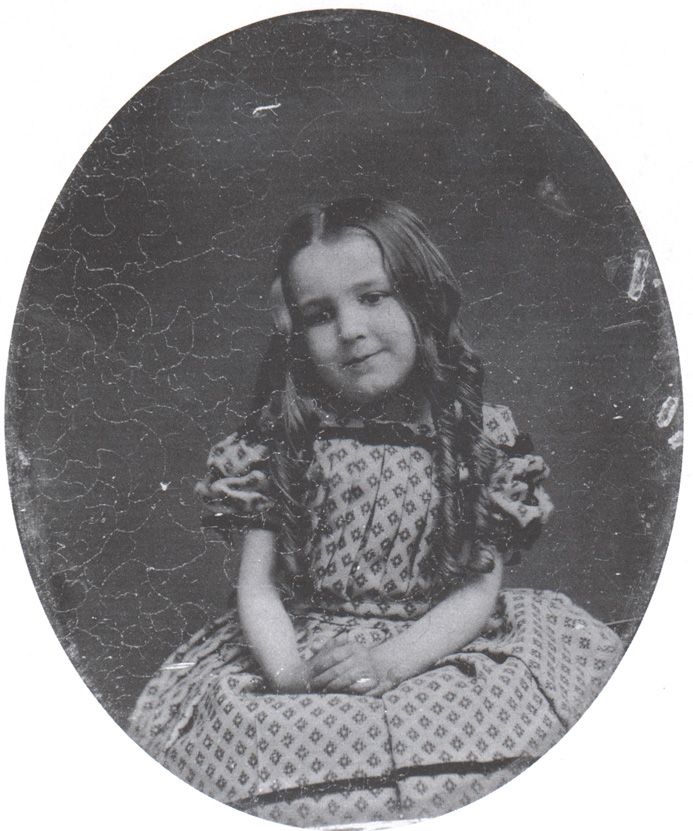
Fanny Adams was one of 5 children to Harriet and George Adams, who lived in Tanhouse Lane in the sleepy rural town of Alton in Hampshire.
Saturday, August 24, 1867, was a hot, sunny summer day and 8-year-old Fanny and her sister Lizzie went to play with their friend Minnie Warner. Minnie was the same age as Fanny and lived two doors down on the same street. The three girls went to play in Flood Meadow which was just 400 yards away from their house.
They were met there by 29-year-old Frederick Baker, who was a local solicitor. Dressed in a black frock coat, light waistcoat and trousers, he looked respectable but had been drinking. He offered the girls halfpennies if they would go with him to The Hollow, a quiet country road not far away. They agreed and went willingly with him.
However, when Baker tried to get the children to go into a hop grove with him, they were unsure. Fanny took the half penny and then refused to go with him, so he gave the other children another halfpenny each and told them to go home. Then he picked Fanny up and carried her into the hop field. This was around 1.30pm.
The other girls went off to play, and eventually returned home around 5pm. When it was realised that Fanny wasn’t with them, the alarm was raised.
At 7pm, a search party went to look for her (it would have been light until at least 8pm at that time of year) and found a sight that no one could have prepared themselves for. Her head, with its eyes gouged out, had been stuck on a pole in the field, and her face slashed and mutilated. Her right ear had been cut off, and found scattered nearby were a leg and thigh.
The contents of her chest and pelvis had been torn out and scattered. It took days for her body parts to be recovered, including her eyes, which were found in the nearby River Wey. Some body parts were never recovered. Still clutched in one of her severed hands was the halfpence that Baker had given her.
A distraught Harriet went to find George, who was playing cricket, to tell him of their daughter’s death. When George heard, he grabbed his shotgun and went looking for the murderer. He was ultimately disarmed by neighbours who sat all night with him to prevent him from getting himself into trouble.
Authorities arrested Baker that day. He had gone back to work, but when they found him, the wrists of his shirt and trousers were spotted with blood and his boots, socks, and the bottom of his trousers were all wet. Two small knives were found on him when he was searched.
When police examined Baker’s diary for that day, they found this entry:
Saturday August 24th. Killed a young girl. It was fine and hot.
Frederick Baker
Baker maintained his innocence and claimed the diary entry, written whilst drunk, simply meant that a girl had been murdered.
The police, meanwhile, had discovered a large stone in the hop field, which had blood and long hair attached to it, and announced that this was likely the murder weapon.

Baker’s committal hearing was at Alton Town Hall on Thursday 29 August. There was a large mob gathered outside, and the police struggled to keep him safe against the furious crowd.
His trial started at Winchester Assizes on 5 December.
The defence claimed that the testimony of 8-year-old Minnie Warner was unreliable and that her identification of Baker was not enough to convict him. They also claimed that the small knives found on him were too small to carry out the dismemberment. But their main defence was the claim that Baker was insane due to a family history of mental illness.
Baker’s father had “shown an inclination to assault even to kill his children”, his cousin had been committed to an asylum four times, his sister had died from ‘brain fever*’, and Baker himself had attempted suicide previously after a love affair ended.
The judge rejected the claim that Baker was irresponsible for his actions through insanity.
After just 15 minutes of deliberation, the jury found Baker guilty.
At 8am on Christmas Eve 1867, Baker was hanged in front of a huge crowd of 5000 people in front of Winchester’s County Prison.
The phrase that has kept Fanny’s name in the public consciousness ever since came thanks to the rather black humour of British sailors. When they were given tins of mutton to eat they declared the unrecognisable and unappealing contents must be ‘Sweet Fanny Adams’.
Fanny was buried in Alton cemetery with a headstone, which was erected by voluntary contributions from the community.

Source:
Murderpedia.org
Wikepedia.org
Image source
https://en.wikipedia.org/wiki/File:The_Grave_of_Fanny_Adams.jpg
https://commons.wikimedia.org/wiki/File:Fanny_Adams.jpg
https://en.wikipedia.org/wiki/Fanny_Adams#/media/File:Frederick_Baker.png
*Brain fever is an outdated Victorian term describing various conditions, including encephalitis, meningitis or scarlet fever.
 Dying for a Cuppa


